
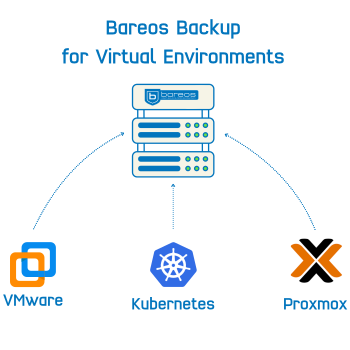
Storage-Insider.de recently published an article about Bareos in virtual infrastructures and described Bareos as a backup platform for environments such as VMware, Proxmox, and container-based infrastructures. The full article is worth a look here (in german language).
It provides you a useful overview of Bareos and below we’d like to add more details on how Bareos protects virtual platforms..
Virtual infrastructures have different demands on backup than classic physical environments. In many cases, it is not enough to protect only files and directories. You may need consistent backups of complete virtual machines, efficient incremental jobs, and restore workflows that bring back an entire system when needed. That is why platform-specific backup methods matter.
VMware: backup with snapshots and changed blocks
VMware is one of the clearest examples. As described on our VMware page, Bareos uses the VMware vStorage API, creates a snapshot during backup and uses Changed Block Tracking (CBT) so that only used and changed blocks are transferred. This keeps backups efficient and avoids shutting the VM down.
Bareos can restore back to VMware storage, either by overwriting an existing VM or by recreating the VM with a new name, which means that VMware backup with Bareos is not just file protection. It supports the full VM workflow.
Bareos VMware plugin supports full, differential and incremental backup, and restore of VM disks. It also documents important requirements and limitations, which is useful for production use.
Proxmox: open virtualization with dedicated plugin support
Storage-Insider also points to Proxmox as an important part of the Bareos story in virtual infrastructures. That is relevant because many teams want open virtualization together with a flexible backup platform.
The Proxmox plugin can be used for agentless backups of VM guests and container guests on Proxmox VE. The plugin supports full backups and restoring is possible either into a new Proxmox guest or into a local vzdump dump file for later recovery.
That is exactly the kind of detail that matters in real environments: not only whether there is a plugin, but what it supports today and how restore works in practice.
Beyond classic virtualization: Kubernetes
Virtual infrastructures today often go beyond hypervisors. Many environments also include Kubernetes. On our Kubernetes page, we show an application-aware backup concept where the Bareos File Daemon runs as a sidecar container and protects both application files and database data.
That matters because modern backup is often about protecting the full application state, not only deployment objects or isolated files. In the Kubernetes example, Bareos is used to protect a WordPress application and its MySQL database across multiple pods.
Why plugins matter
One reason Bareos can fit so many environments is its plugin model. Bareos functionality can be extended through plugins for the Director, Storage Daemon, and File Daemon. It also describes the special role of Python plugins, which are used to connect Bareos with environment-specific logic. VMware is one example.
This is important in virtual infrastructures, because VMware, Proxmox, and Kubernetes do not all follow the same backup logic. Bareos can adapt through platform-aware plugins instead of forcing every workload into one model.